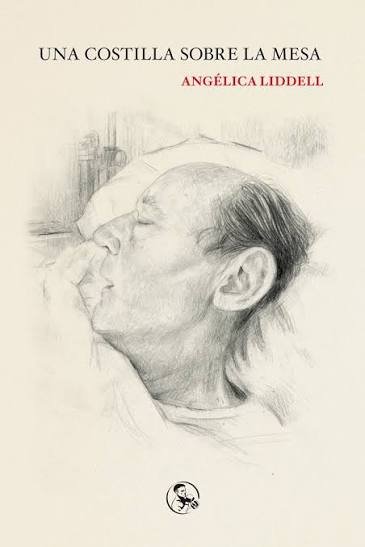
Una costilla sobre la mesa
Angélica Liddell
FICTION | 2018 | 232 pages
‘Hold me up, I’m going to fall,’ we read as soon as we open A Rib on The Table. Divided into eight parts, Angélica Liddell’s new book combines verse with the structure of a diary, the essay and the epistolary genre. Yet, in whatever form it takes, it remains, above all, a book of poetry.
Angélica Liddell begins with the irrational (‘that which brings us into contact with unrecognisable realms, with the “fear and trembling” that shape the spirit’), before delving, without distinction, into both beauty and illness. With language that is at once lyrical, raw and simple—relentless even towards herself—she describes both the decay of the flesh and unattainable ecstasy, and succeeds in making language a space where art, music and the spiritual coexist: ‘Faith does not know that it is faith; it is unaware of itself; to possess it would be to deny it. The only true impulse towards faith is to give oneself completely to someone who ignores you’.
A Rib on The Table is a courageous book that transcends the confessional to delve into mystery and the incomprehensible. A book that, in a unique way, explores territories scarcely touched upon by Spanish-language literature. A book that turns mysticism into poetry, as if Saint Teresa of Ávila or Saint John of the Cross were writing in the 21st century.
‘The burning need to remain speechless forever—that is poetry.’
RIGHTS: spanish LA UÑA ROTA EDICIONES
“In A Rib on the Table, Liddell takes the reader on a journey into the darkest depths of illness and madness, a tour through the corridors of a hospice (“Here, it’s all about money”), a tale of drips, needles, nappies, hallucinations and the smell of faeces, in which she spares no sordid detail nor glosses over aspects such as the stench of shit that clings to her palate when she enters her parents’ room. “I won’t have children whom I can demand to be slaves and have nimble hands to clean up the shit,” she writes, wondering whether she herself carries in her blood the madness that has awakened in her parents. “I’m afraid of waking up senile tomorrow.””
BY ANGÉLICA LIDDELL:
El Silk Road NOVEL, 2026 Cuentos atados a la pata de un lobo
SHORT STORIES, 2025
Los inspectores de linóleos viejos
FICTION, 2023
Los barcos hundidos que te visitan
POETRY, 2023
Veo una vara de almendro. Veo una olla que hierve.
POETRY, 2021 Una costilla sobre la mesa POETRY, 2018
Trilogía del infinito
FICTION, 2016