
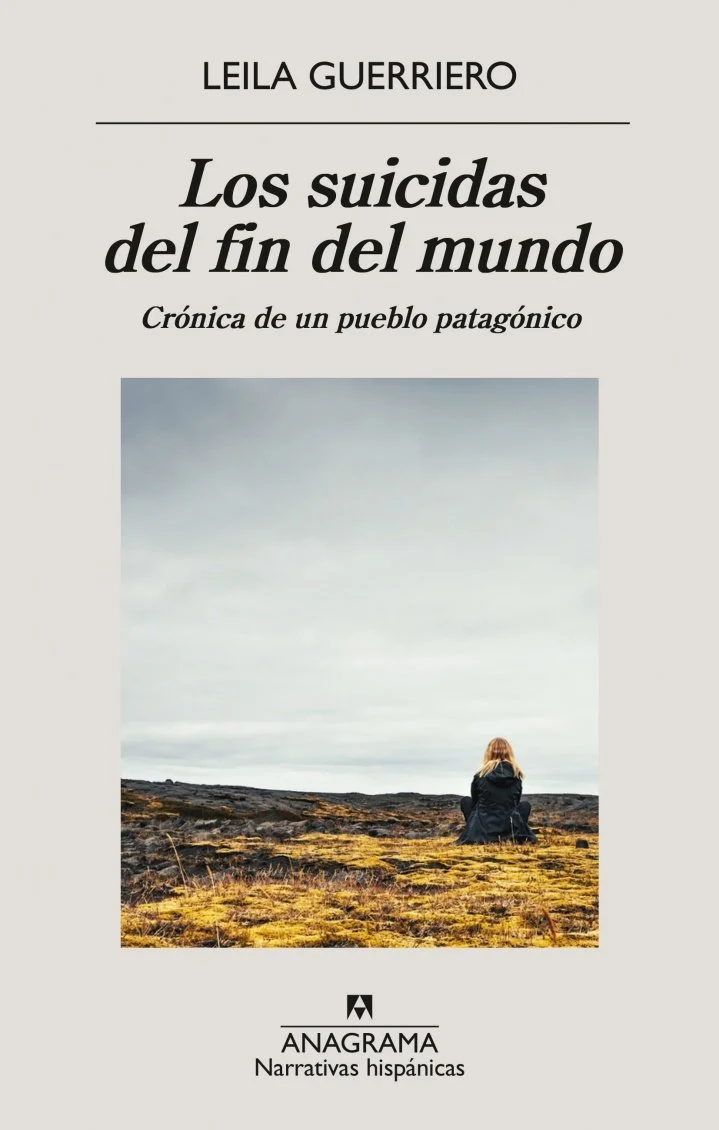
Los suicidas del fin del mundo
Leila Guerriero
NON FICTION | 2006/2026 | 232 pages
Between 1997 and 1999, a wave of suicides rocked the small oil town Las Heras, located practically in the middle of nowhere in the Argentine province of Santa Cruz in Patagonia. Most of the suicides were by people around the age of 25 who grew up in modest families native to the region. Journalist Leila Guerriero traveled to that desolate Patagonian location, interrogated the friends and families of those who died, traversed the same, always-deserted streets, and visited every corner of that town. She interviewed the neighbors, asked questions to everyone who had an answer or a theory that could explain the tragedy.
The result is a brutal story that reconstructs the tragic episodes of those years while at the same time painting an expressive picture of everyday life in a community that is far from large cities. Las Heras, with its high rate of unemployment due to the oscillating nature of the oil industry and because of the lack of future for its youth, brings up an question that is still unanswered: suicides, as ill-fated destinies, still occur today. Los suicidas del fin del mundo is, then, an unsettling tale that can be read with the fascination of a novel and the horror that is caused by a reality marked by the indifference of those who aren’t involved, prejudice, and weariness.
RIGHTS: spanish ANAGRAMA | french RIVAGES | italian MARCOS Y MARCOS | polish WYDAWNICTWO W.A.B. | portuguese (portugal) QUETZAL | swedish PROZAC | german VOLDEMEER | chinese PEOPLE’S LITERATURE PUBLISHING HOUSE | catalan SALDONAR
“A master of the chronicle, Guerriero uses words like a rigid wind: she penetrates, inquires, into lives without detours, adjectives, or literature. She uses words like life. All we have left is wonder.”
“Los suicidas del fin del mundo by journalist and writer Leila Guerriero falls within the genre of documentary literature. The work is a crónica (in fact, its subtitle is “Chronicle of a Patagonian Town”) that was originally published in 2005. It recounts the events that took place in Las Heras, a town in the Argentine province of Santa Cruz within the Patagonia region. The town sprang up from nothing with the arrival of the railroad in 1909 and grew with the boom in oil activity starting in the 1950s. Over time, that prosperous, artificially created space experienced its decline due to the privatization of the oil company, but it was yet to deteriorate further—in the late 1990s, the town was shaken by the staggered suicides of twelve young people, tragic events that the inhabitants didn’t know how to interpret. In the book, Leila Guerriero displays her skills as a storyteller. With an objective, somewhat melancholic, and barely audible voice, Leila Guerriero portrays a superstitious and disillusioned society where forging community bonds is difficult. Las Heras is a rootless town where young people lack a future; a decaying place inhabited by uncultured individuals, often traumatized since childhood; by drunken men who assault women and by women who have children in their teens; by families where the fathers abandon the home; by individuals who sexually assault children; by ignorant, brutish, and clumsy people… Los suicidas del fin del mundo thus depicts a tragic and violent world that is still very much alive today.”
BY LEILA GUERRIERO:
Los suicidas del fin del mundo
NONFICTION, 2004/2026
La dificultad del fantasma
NONFICTION, 2024
La llamada
NONFICTION, 2024
Zona de obras
ESSAYS, 2014/2022
La otra guerra
NONFICTION, 2021
Frutos extraños
NONFICTION, 2009/2020
Teoría de la gravedad
ESSAYS, 2019
Opus Gelber
NONFICTION, 2019
Plano americano
NONFICTION, 2013/2018
Una historia sencilla
NONFICTION, 2013